
S&P Global Ratings on Thursday said the hostilities between India and Pakistan heighten risks to the credit metrics of both countries, and any escalation in clashes would put downward pressure on sovereign credit support.

The Reserve Bank of India (RBI) on Friday delivered a 25 basis point (bps) repo rate cut analysts expected, driven by the strong 8.2 per cent GDP growth in the September quarter. However, analysts do not expect a runaway market rally as the impact of US tariffs continues.

Gold prices rallied for the third straight day and gained Rs 2,600 to hit a fresh lifetime high of Rs 1,26,600 per 10 grams in the national capital on Wednesday in line with strong global trends amid looming geopolitical uncertainties triggered by the prolonged shutdown of the US government.

'When global politics has some intervention on the core software one uses, and if you are cut off from your own data in critical workflows, sovereignty is no longer optional. It becomes a necessity.'

The reduction in the goods and services tax (GST) rates has increased the momentum in India's economic activity both on the supply and demand sides, while robust agricultural activity - reflected in the strong onset of rabi sowing and adequate reservoir levels - has reinforced the outlook for food supply and rural incomes, the finance ministry said on Thursday.

The Indian men ruled white-ball cricket, while South Africa ended decades of hurt by winning the World Test Championship at Lord's. Royal Challengers Bengaluru finally lifted their maiden IPL title, though the celebrations were dimmed by a deadly stampede. Above all, it was India's women who won a billion hearts by finally adding an ICC World Cup trophy to the cabinet.
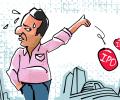
India's equity markets may have expanded rapidly, but initial public offerings (IPOs) are increasingly becoming exit vehicles for early investors rather than as engines for raising long-term capital, a shift that undermines the spirit of public markets, Chief Economic Advisor V Anantha Nageswaran warned on Monday at a CII event.

From Rs 73k to over Rs 1.2L between January-December 2025 -- is buying gold in 2026 still sensible?

The prospect of protracted uncertainties in the global economic landscape not only pose a risk for India's growth outlook in 2025-26, but are also likely to dent the private sector's capital raising and investment plans, the finance ministry averred on Tuesday, cautioning the country's corporates that the era of 'easy pickings' was over.

Singapore's state investor Temasek Holdings, which recently picked up 10 per cent stake in Haldiram, has been consistently expanding its footprint in India while slowly withdrawing from China over the last three years amid growing geopolitical risks and economic headwinds. India has become Temasek's third-largest market, after Singapore (27 per cent) and China (18 per cent), with its exposure to the country higher than the rest of Asia Pacific excluding the three (11 per cent), according to Temasek's annual review.

India is on track to exceed the $4 trillion milestone in 2025-26 (FY26), surpassing the $3.9 trillion gross domestic product (GDP) mark recorded at the end of March 2025, Chief Economic Adviser (CEA) V Anantha Nageswaran said on Tuesday.

'From tariff tensions and border skirmishes to unrest in West Asia.' 'The worst may be behind us. But any further upmove will now have to come from earnings.'

The rupee breached 90-levels against the greenback for the first time on Wednesday, falling 6 paise to 90.02 in early trade, as banks kept buying US dollars at higher levels and FII outflows continued.

India should simultaneously prioritise domestic exploration and production of more oil and gas in the country, and ensure we retain diversified suppliers for imports, points out former foreign secretary Ranjan Mathai.

'Countries like Cambodia, Vietnam, Laos, and the Philippines have a 50 per cent increase in bookings.'

While advancements in biotechnology hold immense promise for health and innovation, they also come with significant risks if misused.

'The pace of gold's ascent is striking, with prices rising from $3,500/oz to $4,000/oz in just 36 days -- far quicker than the historical average of 1,036 days taken to achieve similar $500/oz gains.'

Stock market investors this week would track the renewed tariff tensions between the US and China, domestic inflation data, besides, quarterly earnings from blue-chips HCL Tech, Infosys and Reliance Industries would also drive the momentum in equities, analysts said.
'The primary market's rhythm mirrors investor confidence. While sentiment may appear cautious, it reflects maturity, not weakness.'

If they act now, they can reshape the strategic map of Asia without firing a shot. If they wait, the next opportunity will come only after a serious Taiwan Strait incident -- by which time the price will be far higher, and the room for boldness far smaller -- the opportunity may well be lost by then. The question is no longer whether this can or should be done, points out Varun Arya.

The new rules allow for a staggered implementation road map, giving companies, data fiduciaries, data principals, and other stakeholders up to 18 months to comply with the administrative guidelines under the DPDP Act.

Additionally, rates in the aviation sector are also expected to increase due to huge claim outgo in the Air India crash.

Amid US-China trade tensions and economic vulnerabilities, India must seize the 'China +1' opportunity, deepen reforms, secure FTAs, and globalise its firms for long-term growth, suggests Ajay Shah.

'Can a nuclear-armed nation sustain itself indefinitely under overt military rule without catastrophic consequences for itself and the region? History suggests otherwise.'

Indian Oil Corporation's (IOC's) Q2FY26 operating profit of 14,600 crore beat Street estimates and was up 16 per cent on a sequential basis. It surged 287 per cent over the year-ago quarter on account of an improved refining performance.

Net inflows into equity mutual funds (MFs) moderated for the second straight month in September, declining 9 per cent during the month to Rs 30,422 crore. The slowdown came as redemptions from active equity schemes rose 30 per cent month-on-month (M-o-M) to a one-year high of around Rs 36,000 crore.
From the outcome of the general elections and then Union Budget to tepid corporate earnings in the September 2024 quarter (Q2-FY25), sticky inflation and Reserve Bank of India's stance on interest rates, extreme weather conditions, Indian stock markets have braved it all in calendar year 2024.

'An asset must generate income. Equities yield dividends, bonds pay coupons, deposits give interest, and real estate earns rent.' 'Gold, silver, and even Bitcoin produce no income, they merely store value. So, they should not be compared to productive assets.'

Global financial markets are wrong in hoping that the worst is over in geopolitical crises such as the Iran-Israel conflict and the Russia-Ukraine war, wrote Christopher Wood, global head of equity strategy at Jefferies, in a recent note to investors called 'GREED & fear'. While most investors and the media are focused on United States (US) Federal Reserve policy and the "endless chatter" of Fed governors, Wood believes the news flow in the financial sphere "pales into complete insignificance" compared with the "tectonic shifts" going on in geopolitics.
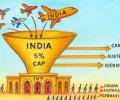
Trump's proposed policy limits undergraduates from any one country to 5% at select top US universities, raising concerns for Indian aspirants eyeing elite colleges.

'...aggressive pricing amid volatility, but these are exceptions.'

'Even now, investors are not bothered about the war but are more concerned whether it will remain localised or not.' 'In case things are contained, markets can stage a bounce back in the next few days.'

Foreign investors have pulled out Rs 31,575 crore from the country's equity markets so far this month, in the wake of turbulence emanating from sweeping tariffs imposed by the US on most nations, including India. This came following a net investment of Rs 30,927 crore in the six trading sessions from March 21 to March 28. This infusion helped reduce the overall outflow for March to Rs 3,973 crore, according to data from the depositories.

Spreading risks in sourcing raw materials for electric vehicle (EV) manufacturing is "very critical" and the government can play a key role by enabling access to these from multiple locations worldwide, said Vivek Srivatsa, chief commercial officer at Tata Passenger Electric Mobility, on Friday while stressing the need for faster localisation, especially of batteries.

RMG firms Dream11, Games24x7, Gameskraft and MPL lost unicorn status after the gaming ban while fintech players led 11 new unicorns added in 2025.

'Allocating 5 to 10 per cent of one's portfolio and staying disciplined through market cycles helps in having a positive investment experience.'

India's macroeconomic health is in a "relative goldilocks situation", and although the risk of higher landed oil prices, due to insurance cost surges and closure of choke points due to the brief Israel-Iran war, has receded, it is "too soon to sound the 'all clear' for the rest of the year", the Finance Ministry said on Friday.

Utilities in the power sector present an interesting investment case at this moment. Most power stocks have lost substantial ground in the past 12 months.

Whether Trump will actually press ahead with the oil sanctions remains unclear, since keeping Russian oil out of the world market risks high oil prices which could boomerang on the US economy and be damaging politically for Trump, points out Ambassador M K Bhadrakumar.

From the 30-share blue-chip pack, Larsen & Toubro rallied nearly 5 per cent. Adani Ports, IndusInd Bank, Tata Motors, Reliance Industries, UltraTech Cement and Asian Paints were also among the major gainers. ITC Hotels, Zomato, Nestle and Maruti were among the laggards.
 © 2026 Rediff.com - Advertise with us - Disclaimer - Privacy Policy - Sitemap - Feedback - About us - Terms of use - Grievances